

You’re staring at a repair estimate for $3,800 to rebuild the transmission in your 2015 sedan. Your friend with a manual transmission paid $1,200 for a clutch job last year. Same mileage, similar car, wildly different bills.
The short answer
Manual transmissions cost less to repair—typically $800–$2,500 for major work—because they’re mechanically simpler. Traditional automatics run $2,000–$5,000 for rebuilds due to hydraulic complexity. CVTs sit in the $2,500–$6,000 range, with some problem models (Nissan 2007–2012, early Honda CVTs) hitting $8,000+ for replacement.
Why manuals cost less to fix
Manual transmissions are direct mechanical systems: a clutch connects the engine to a gearbox with physical gears you select via the shifter. Fewer electronic components, no torque converter, no hydraulic control system. When something breaks, it’s usually the clutch (a wear item), a synchronizer (the mechanism that matches gear speeds), or a bearing.
A clutch replacement—the most common major repair—runs $800–$1,500 depending on the car. The parts cost $150–$400; the rest is labor. It takes 3–6 hours because the transmission has to come out to access the clutch. Synchros and bearings cost more ($1,500–$2,500) but failures are rare if you’re not forcing gears or grinding shifts.
Manual transmissions in Honda Civics, Toyota Corollas, and Mazda models routinely exceed 200,000 miles with proper maintenance. The key is replacing the clutch before it’s completely fried and changing the gear oil every 30,000–60,000 miles.
Why automatics cost more
Traditional automatic transmissions use a torque converter (a fluid coupling that replaces the clutch), planetary gearsets, hydraulic pressure to shift, and electronic solenoids to control fluid flow. More parts, more failure points, higher repair bills.
When an automatic fails, you’re looking at $2,000–$5,000 for a rebuild. That typically includes disassembling the transmission, replacing worn clutch packs (yes, automatics have internal clutches), replacing seals, and rebuilding the valve body. If the torque converter is worn, add $600–$1,500 to that bill.
Remanufactured transmissions—pulled from salvage, cleaned, and rebuilt—run $1,500–$3,500 installed, but carry shorter warranties (12 months vs. 3 years for new). A brand-new replacement transmission can hit $4,000–$8,000 depending on the model.
Durability varies by model and maintenance history. The more important variable is regular fluid changes. NHTSA complaint data shows clear patterns: transmissions that get consistent fluid service last longer, but design flaws in certain model years can cause failure regardless.
The CVT complication
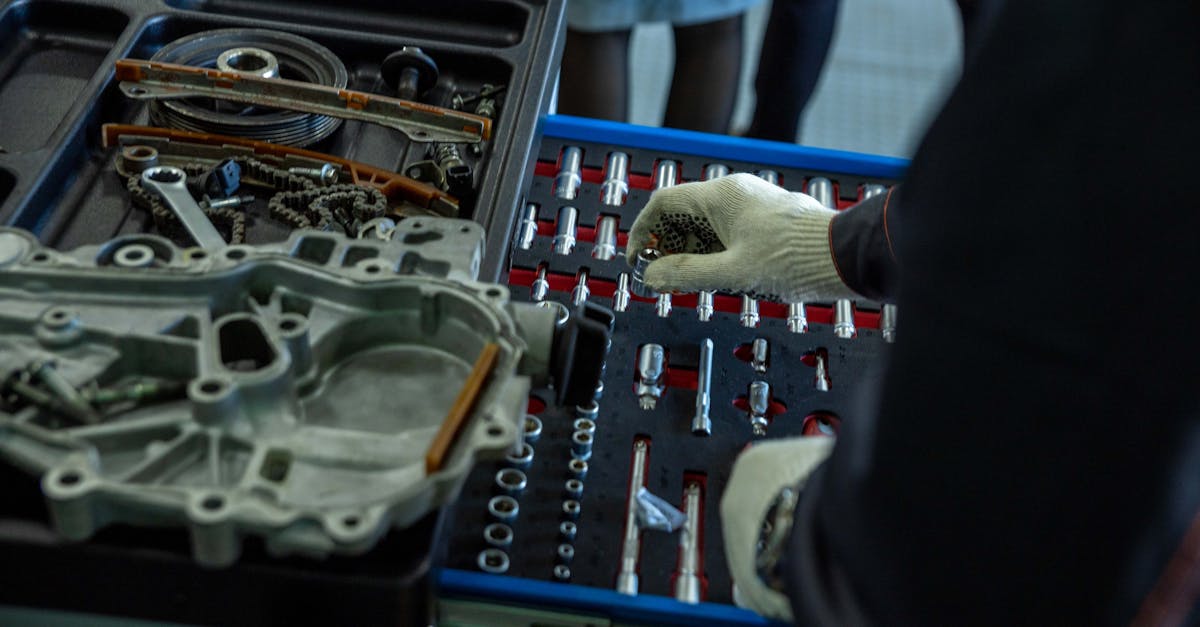
CVTs (continuously variable transmissions) use belts and pulleys instead of fixed gears, delivering smoother acceleration and better fuel economy than traditional automatics. The problem: some models have abysmal reliability.
Nissan Altima and Rogue CVTs from 2007–2012 generated over 2,000 NHTSA complaints for shuddering, slipping, and complete failure—sometimes before 80,000 miles. Honda Civic and CR-V models from 2006–2015 had similar issues, though fewer complaints overall. Nissan settled a class-action lawsuit and extended warranties on affected models, but many owners still paid $4,000–$8,000 for replacement transmissions.
Newer CVTs (2013+) show lower failure rates. Per NHTSA complaint data, recent Toyota CVTs report significantly fewer issues than earlier Honda and Nissan models. But the risk in early CVT years remains real.
CVT replacement costs $4,000–$8,000 because the units are often replaced rather than rebuilt. Few independent shops have the tooling or expertise to rebuild CVTs, so you’re buying a new or remanufactured unit from the dealer.
Routine maintenance: transmission fluid replacement cost
Fluid changes are the cheapest way to extend transmission life, but costs vary by type.
Manual transmission fluid runs $150–$300 at a dealership, $50–$100 at an independent shop. DIY costs $20–$60 if you have basic tools. The job takes 30–60 minutes: drain old gear oil (usually SAE 75W-90), refill with the correct spec. Interval: every 30,000–60,000 miles per most manufacturer schedules.
Automatic transmission fluid costs $150–$300 for a drain-and-fill at an independent shop, $200–$400 at a dealer (includes filter and pan gasket replacement). DIY runs $30–$80 for fluid only, $60–$150 with a filter kit. Interval: 30,000–60,000 miles, though some manufacturers now claim “lifetime fluid”—a claim independent mechanics universally reject. Old, degraded ATF causes slipping and overheating.
CVT fluid replacement is $200–$400 at a dealer, and most dealers won’t recommend DIY. CVT fluid is precision-engineered; overfilling or underfilling by even half a quart causes belt slipping and premature wear. Fluid alone costs $60–$150 per quart, and a full change requires 8–12 quarts. Nissan CVT NS-3, Honda HCF-2, and Toyota CVTF are not interchangeable—using the wrong spec voids your warranty and destroys the transmission.
Transmission specialists recommend CVT fluid changes every 20,000–30,000 miles (vs. the dealer-recommended 60,000) to reduce the risk of catastrophic failure, especially on problem models from 2007–2012. It’s expensive insurance, but cheaper than a $6,000 replacement.
Transmission slipping repair: what it costs
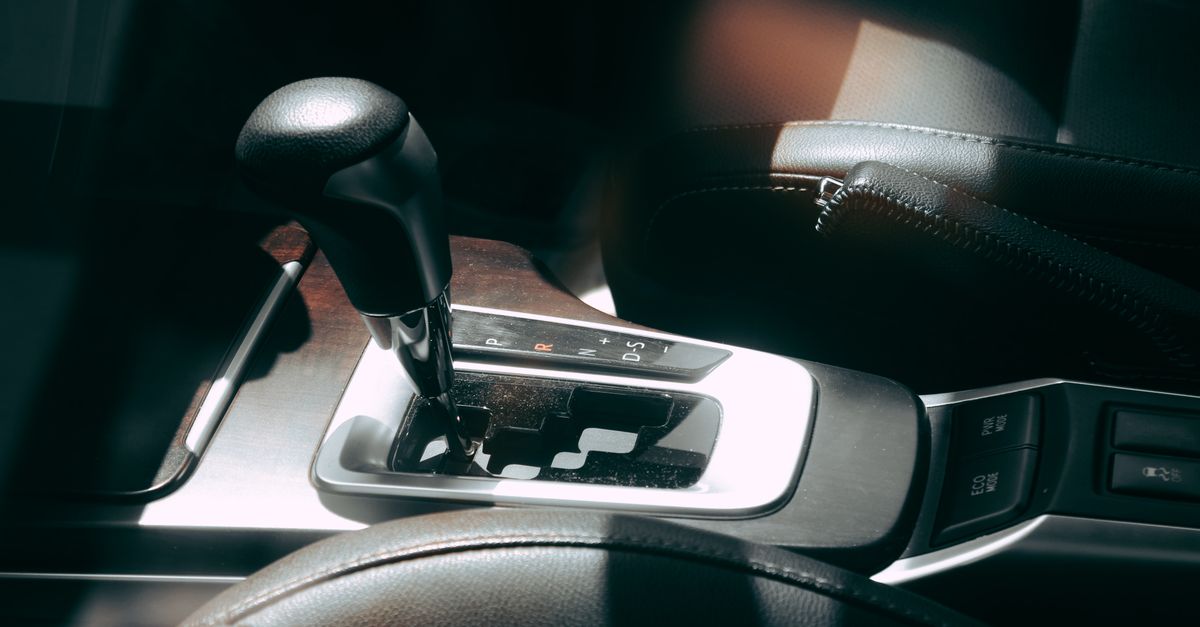
Slipping is when the engine revs but the car doesn’t accelerate proportionally, or there’s a delay before power engages. In automatics and CVTs, this usually means low fluid, degraded fluid, stuck solenoids, or a worn torque converter or belt.
If slipping starts suddenly, stop driving and tow the car to a shop. Continued driving can turn a $500 diagnosis into a $5,000 catastrophic failure.
Here’s the repair cost hierarchy:
- Low fluid level: Top-off and leak inspection, $100–$200. DIY-friendly if you’re confident checking the level (consult your owner’s manual).
- Degraded fluid: Fluid and filter change, $150–$300. DIY for manuals and traditional automatics; dealer-only for CVTs.
- Stuck solenoid: Solenoid cleaning or replacement, $300–$800. Requires dropping the transmission pan; not DIY.
- Worn torque converter (automatics): $600–$1,500. Dealer or specialist only.
- Worn CVT belt: $1,200–$2,500. Requires complete CVT disassembly; specialist-only.
- Transmission rebuild: Internal gears, seals, friction material, $1,500–$3,500.
- Transmission replacement: New or remanufactured unit plus labor, $4,000–$8,000+.
These ranges come from Kelley Blue Book and RepairPal data, cross-verified against dealer service rates. Actual costs vary by 30–50% depending on your location and shop type.
CVT reliability and what the data shows
Manufacturer claims: 10–15 years or 120,000–150,000 miles with regular fluid changes.
Real-world data from NHTSA complaints and lawsuit documents:
- 10–20% of Nissan CVTs (2007–2012) failed before 80,000 miles
- Failure risk dropped significantly in 2013+ models but issues persist
- Honda and Toyota CVT models show lower complaint rates per NHTSA data, but early models (2006–2015 Honda Civic/CR-V) still reported problems
- Transmission specialists recommend fluid changes every 20,000–30,000 miles on problem-model years to extend lifespan, though regular changes don’t eliminate risk entirely
If you’re considering a used car with a CVT, check the model year against NHTSA’s complaint database at safercar.gov. Avoid Nissan Altima/Rogue 2007–2012 unless the CVT has already been replaced under warranty.
What it means when you’re deciding
If you own a car with transmission problems, the math is straightforward: compare the repair cost to the car’s value. A $3,500 rebuild on a car worth $5,000 rarely makes sense unless you plan to drive it another 100,000 miles. On a $15,000 car, it’s cheaper than replacement.
If you’re shopping for a car, transmission type matters for long-term cost:
- Manuals: lowest total cost of ownership if you’re willing to drive one; harder to find, especially in newer models
- Traditional automatics: higher repair risk than manuals, but proven durability in certain model years; what most buyers want
- CVTs: fuel economy advantage, but check the specific model and year against NHTSA data before buying
Routine maintenance is the single biggest variable. A $250 fluid change every 30,000 miles is cheap insurance against a $5,000 failure. Skip it, and you’re rolling the dice.
FAQ
How much does transmission fluid replacement cost?
Manual transmission fluid: $50–$300 depending on shop; automatic: $150–$400; CVT: $200–$400. DIY is cheaper for manuals and automatics but not recommended for CVTs due to precision filling requirements.
What does transmission slipping mean and how do I fix it?
Slipping means the engine revs without proportional acceleration. Causes: low or degraded fluid ($100–$300 fix), stuck solenoids ($300–$800), worn torque converter or belt ($600–$2,500), or internal damage requiring rebuild ($1,500–$5,000+). Stop driving immediately and tow to a shop.
Are CVT transmissions reliable? Do they last?
Depends on the model. Nissan Altima/Rogue 2007–2012 and early Honda CVTs (2006–2015) have high failure rates per NHTSA data. Newer models (2013+) show better reliability. Regular fluid changes (every 20,000–30,000 miles) help but don’t guarantee longevity.
How often should I change transmission fluid?
Every 30,000–60,000 miles for all types. Ignore “lifetime fluid” marketing—independent mechanics and transmission specialists recommend regular changes. For problem CVT models from 2007–2012, consider 20,000-mile intervals.
Is it cheaper to repair or replace a transmission?
Rebuilds cost $1,500–$3,500; remanufactured replacements run $1,500–$5,000 installed; new replacements hit $4,000–$8,000+. Rebuild if the core is salvageable, replace if catastrophic failure or rebuild cost exceeds 60% of replacement cost. Compare both to the car’s total value.
What are the early signs of transmission problems?
Delayed engagement when shifting into Drive or Reverse, slipping (revs without acceleration), harsh or clunky shifts, whining or grinding noise, burning smell, or fluid leaks (red or brown fluid under the car). Catch these early and you might avoid a rebuild.
For related maintenance schedules and intervals, see Car Maintenance Schedule by Mileage: What’s Real vs. Upsell . Transmission fluid is separate from engine oil but follows similar service discipline—regular changes prevent expensive failures.
This is general information, not professional mechanical or financial advice. Transmission diagnostics require a certified mechanic. Costs and reliability vary by model, driving conditions, and maintenance history. For critical transmission issues, consult a transmission specialist or dealership service department before deciding to repair or replace.