
Most shops quote brake work as a package: pads plus rotors, $600–$1,200, take it or leave it. Half the time you don’t need the rotors. The other half, you absolutely do — and waiting will double the bill.
Here’s the decision you’re actually making: brake pads wear on a schedule you can predict. Rotors wear based on how badly you ignored the pads. If you catch pads early, rotors last 50,000–70,000 miles or more. If you drive through the grinding phase, rotors are scrap metal and the job goes from $300 to $1,200.
This guide breaks down what you’re paying for, when rotor replacement is legitimate, and how to assess the condition yourself so you know whether your shop is reading the damage or padding the ticket.
What Brake Pad and Rotor Replacement Actually Costs
The “$150–$1,500” range you see online isn’t useful because it conflates three separate jobs. Here’s the real breakdown:
| Job Type | Parts Cost | Labor | Total (Per Axle) |
|---|---|---|---|
| Pads only (economy) | $50–$100 | $100–$200 | $150–$300 |
| Pads only (ceramic/mid-range) | $80–$150 | $100–$250 | $200–$400 |
| Pads only (premium/performance) | $120–$250 | $150–$300 | $300–$550 |
| Pads + rotors (aftermarket) | $250–$450 | $200–$400 | $600–$850 |
| Pads + rotors (OEM or luxury) | $450–$800 | $300–$600 | $900–$1,500+ |
Add 20–30% if you’re at a dealership instead of an independent shop. Add another 50–100% if you drive a European luxury sedan or performance car — those rotors are bigger and the labor book time is padded.
Cost data from Edmunds and Kelley Blue Book maintenance databases; regional labor rates vary.
When Brake Pads Need Replacement
Pads wear in a predictable range: 25,000–70,000 miles depending on your driving. City traffic and aggressive braking land you at the low end. Highway cruising and light pedal pressure get you to 60,000–70,000 miles, sometimes more with ceramic pads.
The warning signs stack up in this order:
-
Squealing on light braking or in reverse — pads have a wear indicator tab that scrapes the rotor as a heads-up. You’re in the final 10–15% of pad life. You have a few thousand miles, not a few weeks.
-
Grinding — metal backing plate is now contacting the rotor. Pads are gone. Every mile you drive scores the rotor deeper, turning a $300 pad job into a $1,200 rotor replacement. Stop driving and book the work immediately.
-
Soft or low brake pedal — not a pad issue, this is air in the lines or a fluid leak. Needs a diagnostic, not a pad swap.
-
Pulsation when you brake — rotors are warped or unevenly worn. Pad replacement alone won’t fix it; rotors are part of the job.
The single best way to catch this early: pull a wheel at 20,000 miles and look. If the friction material (the dark pad surface) is thinner than a quarter-inch, you’re in the replacement window. Schedule it before the squealing starts and you’ll save the rotors.
The Rotor Question: Scored vs. Glazed
This is where shops make their margin, and where most owners get upsold. When pads come off, the tech assesses rotor condition. You’ll hear one of three things:
-
“Rotors look good” — smooth surface, light burnish, no grooves. Replace pads only. Rotors stay.
-
“Rotors are glazed” — shiny, hardened surface from heat. Not damaged, just slick. Some shops will try to sell you rotors here. Push back: ask them to scuff the glaze with sandpaper or a brake cleaner. Pads will re-bed in 100–200 miles. If they refuse, get a second quote.
-
“Rotors are scored” — visible grooves you can catch with a fingernail. This is legitimate rotor damage. Pads wore too far, and the backing plate cut channels into the rotor. New pads on scored rotors will wear unevenly and fail early. Replace both.
The test: ask the shop to show you photos or bring you to the car. Scoring is visible. Glazing is shiny but smooth. If they won’t show you, they’re guessing or padding.
When Rotors Can Be Resurfaced (and Why Shops Don’t Anymore)

Older brake systems had thick rotors that could be machined smooth again. Cost was $50–$100 per rotor, and it bought you another pad cycle.
Modern rotors are thinner and have a minimum safe thickness spec set by the manufacturer. Resurfacing removes material, and most rotors are already close to minimum thickness by the time pads wear out. Machine them and they’re below spec: thinner rotors overheat, warp faster, and fail sooner.
The other reason: new aftermarket rotors cost $75–$150 each. Resurfacing is $50–$100 plus labor to remove and reinstall. You’re paying $30–$50 more for a new part that’s guaranteed safe thickness. Resurfacing only makes sense on high-end or oversized rotors where new parts run $300+.
Bottom line: if your shop recommends resurfacing on a typical sedan or crossover, ask why they’re not just replacing. If they recommend replacement on rotors that look smooth, ask to see the scoring.
How to Inspect Brake Pads Yourself
You don’t need a lift. You need a flashlight, a jack, and 15 minutes.
What you’ll need:
- Floor jack and jack stand (never crawl under a car on a jack alone)
- Lug wrench
- Flashlight or work light
- Tire pressure gauge (while the wheel is off)
Steps:
-
Jack the car and remove the wheel. Consult your owner’s manual for jack points. Use a jack stand as backup. Never trust a jack alone.
-
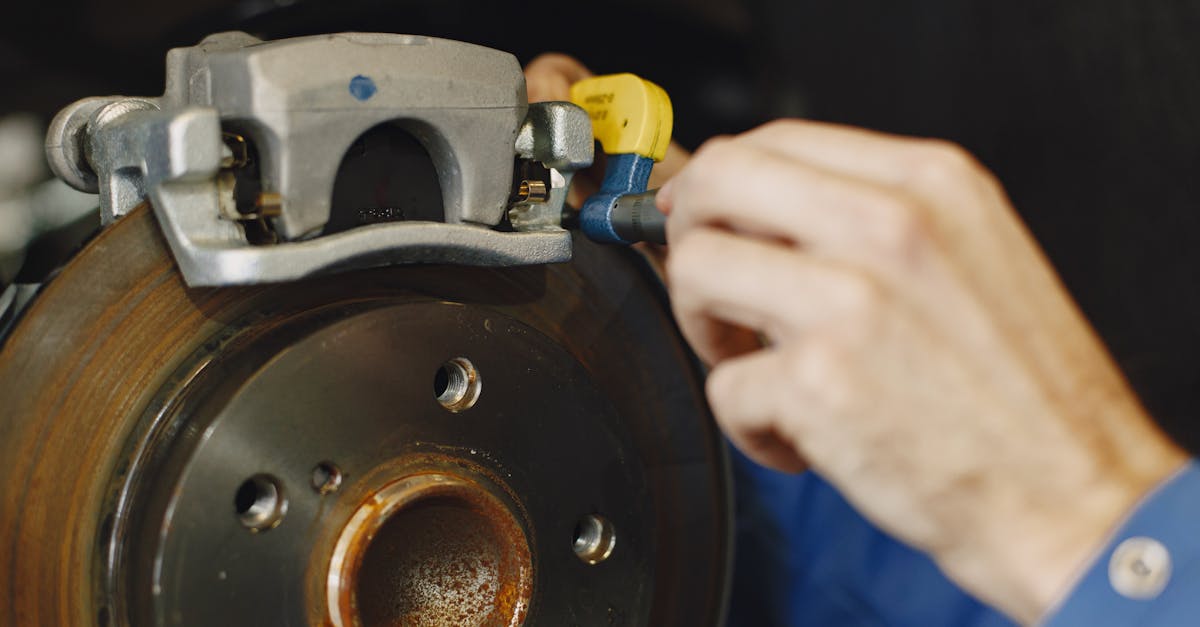
Locate the brake caliper. It’s the clamp assembly that sits over the rotor. The pads are inside, gripping the rotor on both sides.
-
Look at the pad from the side. You’ll see a dark friction material backing against a metal plate. Measure the friction material thickness — if it’s less than 1/4 inch (about 6mm), the pads are near end of life. Less than 1/8 inch and you’re in the danger zone.
-
Inspect the rotor surface. Run your finger across it (engine off, car in park, parking brake on). Smooth with light circular marks is normal. Deep grooves you can catch with a fingernail mean the rotor is scored.
-
Check the other side. Brake wear isn’t always even. If one pad is thinner than the other, the caliper may be sticking — that’s a separate repair.
Repeat on the other three wheels if you want the full picture. Most shops charge $20–$40 for a four-wheel brake inspection, so DIY saves you the diagnostic fee and gives you leverage when the quote comes.
When to Replace Pads Only vs. Both

If you inspect and find:
-
Pads < 1/4 inch, rotors smooth → Replace pads only. Budget $150–$400 per axle depending on pad quality.
-
Pads < 1/4 inch, rotors glazed but not grooved → Replace pads, ask shop to clean rotors. If they insist on replacement, get a second opinion.
-
Pads < 1/8 inch or grinding noise, rotors scored → Replace both. Budget $600–$1,500 per axle depending on vehicle and parts quality.
-
Pads worn unevenly, one side thinner → Replace pads and inspect caliper. Sticking calipers cause uneven wear and need service or replacement (add $150–$400 per caliper).
Don’t mix and match pad quality front-to-rear unless you’re replacing only one axle. Mismatched friction compounds change brake balance and can cause pulling or longer stopping distances.
Cost by Vehicle Type
Your car’s weight, brake size, and badge all move the number:
- Compact/midsize sedans (Civic, Camry, Accord): $150–$400 pads only, $600–$900 pads + rotors
- Crossovers/SUVs (RAV4, CR-V, Pilot): $200–$500 pads only, $700–$1,200 pads + rotors
- Trucks (F-150, Silverado, Ram): $250–$600 pads only, $800–$1,500 pads + rotors (larger rotors, heavier load)
- Luxury sedans (BMW 3-series, Mercedes C-Class, Audi A4): $300–$700 pads only, $1,200–$2,000 pads + rotors (OEM parts premium, longer labor book time)
- Performance cars (Mustang GT, Camaro SS, WRX): $400–$800 pads only, $1,500–$2,500+ pads + rotors (larger rotors, multi-piston calipers, performance pad compounds)
If you’re driving a luxury or performance vehicle, expect aftermarket parts to be 30–50% cheaper than OEM, but confirm the aftermarket brand has a solid reputation (Akebono, Bosch, Brembo, Centric, PowerStop). Cheap no-name pads squeal, dust heavily, and wear rotors faster.
For detailed cost comparisons on trucks vs. other vehicles, related content discusses how maintenance needs scale with vehicle class — diesel trucks often have upgraded brakes that push costs higher.
When to Call a Professional
Brakes are safety-critical. If you see or hear any of the following, don’t wait and don’t try to DIY unless you have proper tools, jack stands, and torque wrenches:
- Grinding noise — pads are gone, rotors are being destroyed
- Brake pedal goes to the floor or feels spongy — fluid leak or air in the lines
- Brakes pull hard to one side — caliper failure, uneven pad wear, or rotor damage
- Brake warning light on the dashboard — may indicate pad wear sensor or ABS fault
- You’ve never done brake work before — improper installation risks brake failure; this isn’t the job to learn on
Brake work requires bleeding the system, torquing caliper bolts to spec, and verifying even pad contact. Skip a step and brakes can fail under hard braking or overheat on a mountain descent.
Similar to other critical wear-and-tear repairs, brake work has clear warning signs you can catch early — but once you’re hearing grinding, the damage is done and the cost doubles.
FAQ
How long do brake pads last?
25,000–70,000 miles depending on driving style and pad compound. City driving and aggressive braking wear pads faster; highway cruising and gentle pedal pressure extend life. Ceramic pads last longest, metallic pads wear faster but offer better stopping power. Check pads at 20,000 miles and every 20,000 after that. Per NHTSA and manufacturer service intervals.
Can you replace brake pads without replacing rotors?
Yes, if rotors are smooth and not scored. Remove the wheel, inspect the rotor surface — if you don’t feel grooves when you run your finger across it, rotors are fine and only pads need replacement. Shops may try to sell rotors on glazed-but-smooth rotors; push back and ask them to show you the scoring.
How much does brake pad and rotor replacement cost?
$600–$1,500 per axle for most vehicles with aftermarket parts. Luxury and performance cars run $1,200–$2,500+. Pads alone are $150–$400 per axle if rotors are in good shape. Dealerships charge 20–30% more than independent shops. Get two quotes if the first one seems high.
When should rotors be resurfaced vs. replaced?
Modern rotors are thin and resurfacing often brings them below minimum safe thickness. Replacement is the standard now — cost difference is only $30–$50 more than resurfacing, and new rotors are guaranteed safe. Resurfacing only makes sense on thick, expensive rotors (luxury or performance cars) where new parts cost $300+ each.
How long do brake rotors last?
50,000–70,000 miles if pads are replaced on schedule. If you ignore squealing and drive into the grinding phase, rotors can be ruined in 5,000–10,000 miles. Rotors also corrode faster in wet or salty climates; northern-state vehicles may need rotors replaced sooner even with proper pad maintenance.
Brake work isn’t optional and it’s not a place to gamble on saving $200. But it’s also not a blank check — know the difference between scored and glazed rotors, ask to see the damage, and get a second quote if the first shop won’t show you proof. Catch pads early and you’ll replace them three or four times before rotors need attention. Wait until grinding and you’re buying both every time.
For context on how brake intervals compare to other scheduled maintenance, related articles discuss condition-based vs. time-based maintenance — brakes fall into the condition-based category, so inspection matters more than mileage alone.
General information, not professional mechanical advice. Brake condition varies by vehicle, driving style, and climate. Have a qualified technician inspect your brakes if you’re unsure or if any warning signs appear.